
What is Equity Delivery in Trading?
- 9th March 2026
- 02:00 PM
- 8 min read






Equity delivery trading means buying and holding company shares in your Demat account over a single trading day and holding those shares for as long as you want. In this type of investment or trading, you have complete ownership of the shares you hold.
With delivery trades, you can sell shares when the stocks grow in valuation, book profit and exit the market.
As per the SEBI, there are 13.6 crore unique stock market investors across India. Being one of them, if you are seeking long-term capital appreciation via stock market investments, read about it here in detail.
A Quick Definition of Equity Delivery Trading
To put it simply, equity delivery is a means of trade where you can buy shares and hold them if you intend to stay invested for a longer duration. Unlike intraday trading, where you must close an open trade position on the same day, here you can hold on to shares for as long as you want.
One of the key benefits of an equity delivery trade is that you can ride out the inherent market volatility. Ideally, holding stocks for a longer period, such as for 5 years to 10 years, might bring you potential profit. Unlike a short-term trade, a long-term window of equity delivery helps the market and the stocks to recover from short-term swings.
What is the Working Process of Equity Delivery Trades?
Now that you know what is equity delivery trading, you must make a note of how this type of trading works and potentially results in gains:
-
Choosing Stocks and Placing Orders
As an investor, you can choose a stockbroker such as PL Capital Group – Prabhudas Lilladher or log in to stock exchange portals such as the BSE or the NSE and choose fundamentally strong stocks with growth potential. Buy them and store the stocks for more than 1 trading day.
-
Trade Settlement
After placing a buy order, generally, you get your shares credited or transferred to your Demat account in a T+1 settlement cycle. It means you receive the ownership of the shares within 1 business day, and you will be able to see it in your Demat account.
-
Holding and Selling
Suppose you have invested INR 20,000 in shares trading at INR 100 and received 200 shares. Now you hold it for more than 1 trading day, and after some time, its value reaches INR 150 per share. Now you choose to sell these shares through your trading account and book a profit of INR 50 per share, totalling to a profit of INR 10,000.
With PL, you can invest in stocks, mutual funds, ETFs and more using the PL Capital app. Download the app today and start investing!
What are Equity Delivery Charges?
Aside from noting the working mechanism of an equity delivery trade, it is important to note the associated charges. It is because noting the charges usually helps in financial planning:
-
Brokerage Charges
While buying and selling shares via a broker, they might impose a brokerage charge. As per the SEBI mandate, brokers in India cannot levy a brokerage charge beyond 2.5% of the total transaction.
-
Depository Participant Charges
Depending on the Depository Participant (DP) or simply your stockbroker, this charge usually ranges between INR 5 and INR 15 and might go up to INR 20 or more. This charge applies when you sell or transfer shares from your Demat account.
-
Other Charges
Additional charges like a GST of 18% applies when executing equity delivery trades. Along with that, stamp duty might be applied.
What is the T+2 Settlement in Equity Delivery?
A T+2 settlement cycle means that when you buy shares using your trading account, it will get credited within 2 business days in your Demat account. However, as per the SEBI revision, since January 2023, stocks generally take a T+1 cycle, reducing the waiting time to get shares credited and reducing the number of unsettled trades.
How to Start Equity Delivery Trading in India?
As already mentioned, you must create a Demat and a trading account with a stockbroker like PL and follow the steps:
Step 1: Log in to your Demat account and look for the company stock that you are interested in.
Step 2: From the search result, select the preferred company and input how many shares you want to buy.
Step 3: Using the balance from your trading account, place the buy order. Note that you must transfer an adequate amount to your trading account from your bank account beforehand, as you must pay in full.
Step 4: Wait for 1 business day, and you will see shares reflecting in your Demat account.
Benefits of Equity Delivery Trading
With equity delivery trades, you can enjoy the following benefits:
-
Ownership and Long-Term Wealth Creation
With equity delivery trades, you own the shares as long as you hold them in your Demat account. Also, with a long-term horizon, it might help capture capital appreciation, which helps with wealth accumulation.
-
Dividends Payouts
Some companies might provide dividend payouts. Thus, with delivery trades, you can create an additional stream of income, adding to your wealth creation.
-
Tax benefits
By holding stocks for equity delivery trades for more than a year, you can save on taxes. For example, gains from equities for more than a year attract an LTCG tax of 12.5% over the INR 1.25 lakh exemption. It is less than an STCG of 20% for holding shares for less than a year.
Key Differences Between Intraday and Delivery Trading
While participating in trades, learning the differences of an equity delivery from day trading lets you choose one informedly:
| Parameters | Equity Delivery | Intraday Trades |
| Share ownership | Here you own the shares as long as you do not sell them. | You cannot own shares for more than a trading day. |
| Level of risk | The risk level is moderate here as the market generally recovers from swings in the longer term. | Short-term swings increase risks here. |
| Holding period | Hold shares for as long as you want. | You cannot hold shares for more than a trading day. |
| Dividend eligibility | You might be eligible for dividends | Here, usually, you are not eligible for dividends. |
Conclusion
Equity delivery in trading means buying and holding shares in your Demat account for the long term to book a profit. You can hold shares for as long as you want, sell them when the value of shares grows and exit the market.
With PL, invest in stocks, SGBs, mutual funds and more using the PL Capital app. Download the app, create a Demat account and start investing!
FAQs on Equity Delivery Trading
1. What is equity delivery in the stock market?
An equity delivery means buying and holding shares in your Demat account. Unlike an intraday trade, you can hold shares for a long time to sell them when the value of the shares grows.
2. What is the difference between equity delivery and intraday trading?
Equity delivery means buying and holding shares for a longer term and selling them later. In intraday trades, you must buy or sell shares within the same trading day.
3. Is equity delivery good for beginners?
Yes, as risks are comparatively lower in delivery trades, it is suitable for beginners to aim for capitalising on the growth of stocks in the long term.
4. How are profits taxed in equity delivery trading?
An STCG tax of 20% on your gains applies if you sell shares within a year. If you hold shares for more than a year and sell them, a 12.5% LTCG tax applies on your gains over INR 1.25 lakh.
5. What are the equity delivery charges in India?
Equity delivery charges like brokerage fees, DP charges, GST, stamp duty, etc, apply in India on transactions of shares.
6. How do I start equity delivery trading with PL India?
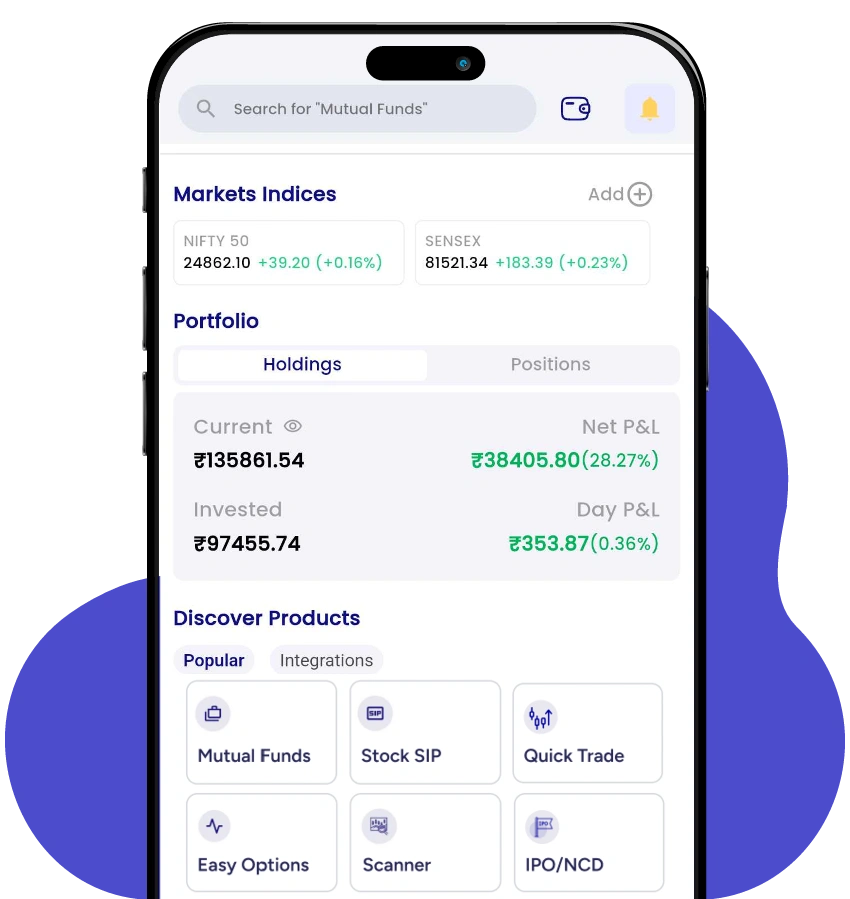
With the PL Capital app, you can easily search for the shares you are interested in. Choose how many shares you want to buy, pay for them and store them in your Demat account.