Demat Account vs Statement of Accounts (SoA)
- 25th February 2026
- 11:00 AM
- 9 min read






In the investment spectrum, a Demat account is mandatory to hold your investments in stocks, mutual fund units, bonds, ETFs, and more in a digital format. While a Statement of Account (SOA) is related to mutual fund investments, outlining how many units you are holding, purchased, sold, etc.
As of FY26, AMFI declared that there are 26.13 crore investment folios in India in mutual funds. As an investor, you must understand the differences between the Demat account vs statement of accounts, as both of these provide ways to store your mutual fund units but differ in functionalities and other aspects.
What is a Demat Account?
A Demat account is sort of a secure vault where you can store your investment assets electronically, including mutual fund units. Depositories such as the National Securities Depositories Ltd (NSDL) and the Central Depository Services Ltd (CDSL) manage Demat accounts. You must create a Demat with Depository Participants or DPs such as stock brokers, banks and other financial institutions.
Thus, aside from investing in mutual funds, if you invest in other assets such as stocks, bonds, ETFs, etc, a Demat account provides you with the convenience to manage all these assets from one place.
What is a Statement of Account (SoA)?
An Asset Management Company or an AMC, mutual fund house, etc, provides you a Statement of Account or an SOA when you invest in a mutual fund scheme. This statement contains a summarised version of your transactions under a mutual fund scheme.
They include transactions, such as purchases, unit redemption, dividends, and the latest value of your held units. Fund houses or AMCs provide you with this information usually periodically, i.e. every 3 months, or annually. Although some AMCs might provide you with the option to get the soft copy of an SOA from their official websites at any time you want.
Difference Between a Demat Account vs Statement of Accounts
| Parameters | Demat Account | Statement of Account |
| Key Purpose | Stores financial assets, including mutual fund units, in a dematerialised format in one place. | It offers you a detailed view of investment activities regarding mutual fund schemes. |
| Functionality | Allows you to purchase, hold, sell and switch units of mutual funds. | Once you make transactions, such as making unit purchases or redeeming them, it highlights those in a summarised format along with the current value of the remaining units. |
| Issuer | Depository Participants or DPs issue a Demat account for you. Depositories such as the NSDL and the CDSL manage or oversee them. | Usually, AMCs issue them on a quarterly or yearly basis. Some AMCs might allow downloading soft copies of SOA through their websites. |
| Assets to Hold | In a Demat account, aside from fund units, you can hold and manage stocks, ETFs, bonds and more that you have invested in. | In an SOA, you can only have mutual fund-related information. |
| Redemption | You can buy and sell fund units in terms of quantity with a Demat account. | In an SOA, you get an update of unit-related transactions in terms of Indian National Rupees. |
| Applicable Charges and Fees | It might involve a few types of fees. For example, DPs or brokers impose an Annual Maintenance Charge that ranges between INR 300 and INR 750 | Here, you do not need to pay any additional charges to maintain and track a fund scheme through an SOA. |
| Suitability | It is more suitable for active investors who might invest in other assets aside from mutual funds and need a seamless management experience from one place. | Non-frequent investors requiring physical or digital copies of fund holdings periodically can opt for it. |
How Mutual Funds Are Held in Demat vs SoA?
From the difference between Demat account vs statement of accounts, you have noted their key differences. Now, to understand how the holdings work, you must note that a Demat account keeps your funds in a dematerialised format and stores them.
Compared to a Demat account, an SOA follows a more traditional approach. When you invest in a mutual fund, your respective AMC maintains an accurate record of your unit holdings and provides you with a summarised statement of your fund investment. It does not require dematerialisation, reducing additional expenses.
Also, while in a Demat account, you can track your fund transactions digitally, with an SOA, you get a physical copy of this from your AMC, if you want.
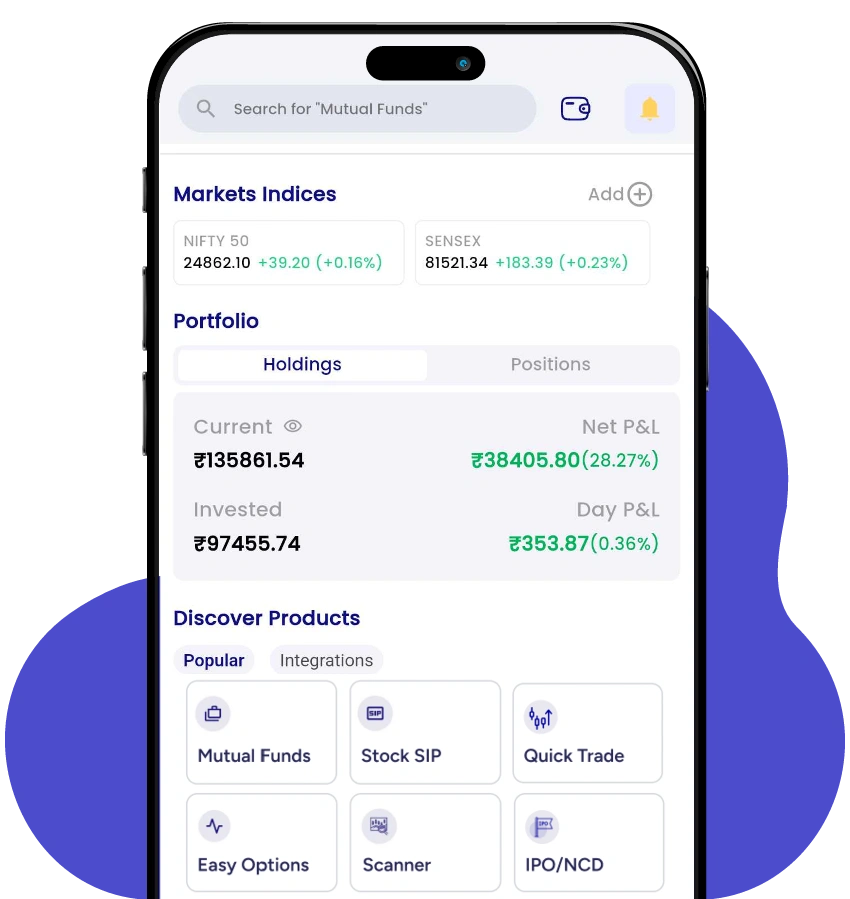
With PL Capital Group – Prabhudas Lilladher, you can invest in stocks, mutual funds, ETFs and more and manage your holdings with a Demat account. Download the PL Capital app today!
Benefits of Using a Demat Account
-
Secures Your Holdings
Compared to the olden days when investors needed to store physical copies of their securities, storing them digitally adds a layer of security. When you manage your mutual funds through a Demat account, it prevents the chances of loss, damage or duplication of physical certificates.
-
Allows Management of Multiple Securities
If you create a Demat account and manage your mutual fund holdings with it, it brings additional benefits. With this account, you can invest in assets, such as stocks, bonds, ETFs and more and track their performance.
Limitations of Using a Demat Account
-
Added Expenses
As you already know, your brokers or DP charges a maintenance fee on your Demat account, which acts as a limitation. Such charges add up and increase your investment expenses over time.
-
Cybersecurity Risks
Similar to a bank account, a Demat account is also prone to cybersecurity threats such as hacking, phishing and other attempts from fraudsters. Therefore, you must stay vigilant, use a strong password and regularly update it, use 2-factor authentication, etc.
Advantages of Using a Statement of Account
-
Consolidated Statement
An SOA provides you with a comprehensive view of your profit and loss statements alongside your investments. Additionally, it provides you with a statement of income and expenses, letting you monitor the investment performance easily.
-
Cost Effectiveness
Usually, you need to pay no additional cost to maintain or track your fund holdings through an SOA. AMCs or fund houses generally provide them at no cost.
Drawbacks of Statement of Account
-
Lack of Real-Time Data
Unlike managing your fund investments through a Demat account, managing them through an SOA lacks in providing real-time updates. Therefore, when you get an SOA, the unit values and other information in it might not be updated.
-
Record Keeping Issues
If you get an SOA in a physical format, it becomes prone to damage, theft or loss. Thus, it poses a security concern, especially if you misplace them.
Which is Better: A Demat Account or a Statement of Accounts?
Opting for a Demat account to manage your fund investment might be suitable when you invest across other assets such as stocks, bonds, etc. It lets you manage multiple investments from one place. Conversely, if you invest only in mutual funds and need periodical updates, you might opt for an SOA.
Also, if you are comfortable with additional charges that brokers usually impose, you might opt for a Demat account. To avoid additional charges, managing your funds through an SOA might be better.
Conclusion
As an investor, you must know the distinctions between Demat account vs statement of accounts, as they are different in functionalities. With a Demat account, you can invest and manage your mutual fund investments, put money into stocks, bonds and more. With an SOA, you can track your mutual fund investments using a physical or a digital copy.
PL lets you invest in mutual funds, stocks, gold bonds, and more through the PL Capital app. Download it today, create a Demat account and start investing!
FAQs on Demat Account vs Statement of Accounts
1. What is the difference between Demat account and statement of accounts?
The key difference between a Demat and a Statement of Account is that the former stores your investments across assets in a digital format. While the latter does not require dematerialisation, you can track the performance of your fund investments through it.
2. Is a Demat account better than a statement of account for mutual funds?
The account type that is between between these two depends on your perspective of investment. For example, if you invest in assets other than just mutual funds, opt for a Demat account. If you invest in mutual funds and require periodic updates, opt for an SOA.
3. Can I switch from SoA to demat for mutual funds?
Yes, you can convert from an SOA to a Demat account for mutual funds. To do this, you must submit a Conversion Request Form or a CRF to your AMC.
4. Do I need a demat account to invest in mutual funds?
No, it is not mandatory to have a Demat account to invest in mutual funds. However, having a Demat account is required to invest in ETFs, and such an account is also effective to manage your holdings electronically from one place on a real-time basis.