
Beginner’s Guide to Equity Trading: Types, Benefits, Risks, and Process
- 27th January 2026
- 12:00 AM
- 10 min read






Equity trading means buying and selling of company stocks and allows investors to have a partial ownership in a business. As per the NSE India, over the last five years, the Nifty 50 and Nifty 500 indices have generated annual returns of 15% and 18% from equities in India, respectively.
However, despite its popularity in India, many beginners still lack the knowledge of trading in equities and confuse it with stocks. This blog provides a beginner’s guide to equity trading and how to start it.
What is Equity Trading and How Does It Work?
Equity trading refers to buying and selling equity shares of a company in the financial markets through exchanges like the Bombay Stock Exchange (BSE) and the National Stock Exchange (NSE).
Due to the advent of technology, online trading has replaced the purchase of physical share certificates. Trading in equities in today’s scenario is considered a good investment portfolio since they offer portfolio diversification by offering good returns.
What are the Key Aspects of Equity Trading?
The key aspects of equity trading are shares, brokers, indices, and so on, which are described below:
-
Shares or Stock Exchanges
In India, equities are traded on stock exchanges like the NSE and BSE. These are the primary stock exchanges that allow investors to trade shares of publicly listed companies.
-
Shares or Stocks
While equity refers to company ownership, shares or stocks are the units of ownership in a particular company. When you purchase shares, you become a shareholder and have a proportional claim on the assets and profit of the company.
-
Brokers
Brokerage firms play a vital role by providing a platform for investors to trade equities. These brokers act as intermediaries who facilitate the buying and selling of stocks on behalf of their customers.
-
Indices
The Nifty 50 and Sensex are two stock indices in India which represent the overall performance of the stock market. These indices are made up of a group of stocks and act as indicators of market trends.
-
Risk and Reward
With equity trading, investors always look for profit from price fluctuations and dividends. It also involves risks, as a lot of factors influence the prices of equities. These factors are company performance, global events, economic conditions, and market sentiment.
-
Settlement Process
The settlement process allows you to transfer shares and funds between equity buyers and sellers. The settlement cycle in India is typically T+1, which means that the transaction settles one working day after the trading date.
Advantages of Equity Trading
Now that you know the equity trading meaning, let us have a look at the advantages of it:
-
Capital Appreciation
Investing in equities helps you earn better returns by holding company shares for a longer period rather than for a shorter period.
-
Stake in Profitable Companies
While investing in the equities of companies, you can become a partial owner of the companies themselves. This ownership grants you the right to vote on particular corporate decisions and a share in the company’s earnings.
-
Diversification
Equity trading allows you to diversify your investment portfolio by spreading your investments across different industries. This helps to manage risk and enhances long-term growth with the potential for overall portfolio stability.
-
Hedging
Investing in equities can hedge against inflation. This means they offer better returns even during times of inflation.
-
Regular Income
A lot of companies distribute the company profits in the form of dividends to the investors. As a result, you may earn a fixed income using equities regularly.
-
Liquidity
The equity market is very liquid, which allows investors to buy and sell shares very easily. This is more beneficial for those who need to access their funds quickly.
-
Numerous Investment Options
It also allows investors to use numerous investment options directly and indirectly. These are initial public offerings (IPO), shares, and mutual funds.
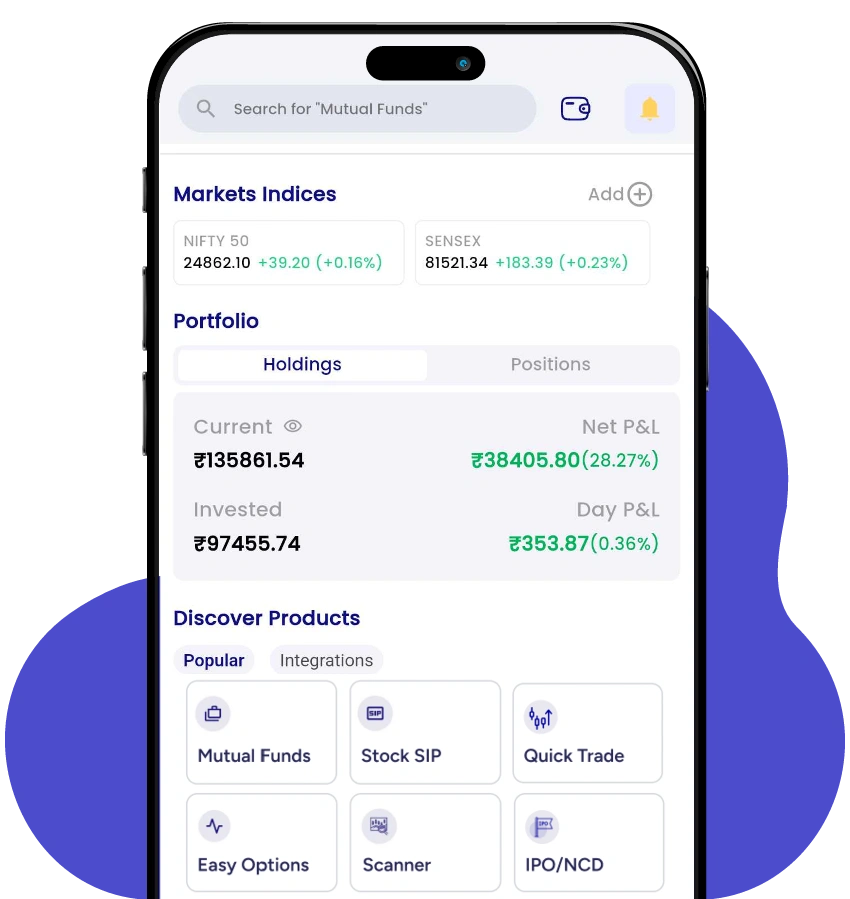
To invest in these securities, you can download the PL Capital Group – Prabhudas Lilladher application and open a Demat account for free. Using PL Capital’s trading platform, you can trade in both Indian and US stocks.
Risks Associated with Equity Trading
-
Financial Risks
Equity trading exposes the company to higher financial risk. There is a high possibility that the company could struggle to fulfil its debt obligations, which can lead to financial distress.
-
Market Volatility
Market volatility refers to unpredictable swings in the stock prices of a company. High volatility means fast price changes, while low volatility means steadier, gradual movements. Higher market volatility can lead to higher risks.
-
Interest Rates
Interest rate fluctuations can also significantly impact the debt cost. An increase in interest rates could increase a company’s interest expenditures.
How to Start Trading on Equities in India?
You can start equity trading in India by opening a Demat account with PL Capital, which is totally free. Moreover, you need to follow the steps below:
Step 1: Open a Demat Account
- Install the PL Capital application from any app store.
- Navigate to the ‘Account’ section and select ‘Profile’.
- Enter your email ID and mobile number in the required fields. Enter the two OTPs that you have received on your mobile number and email for verification.
- Now, enter your name as per your PAN and PAN for completing instant e-KYC.
- Verify your Aadhaar number using OTP verification, which you have received in your Aadhaar-linked mobile number.
- Allow access to your Digilocker, and your Demat account will be opened.
Step 2: Market Research and Self-Evaluation
Evaluate how much risk you can take and set realistic goals. Using fundamental analysis, ascertain your chosen stock’s actual value. Additionally, consider the various factors such as assets, liabilities, net worth, and historical performance.
Step 3: Add Funds
- Go to your account section and add funds by choosing the mode of transfer, such as UPI.
- Select your linked bank account.
- Enter the amount and add funds.
Step 4: Place Order
To buy stocks, place your first buy order by choosing the quantity of shares you want to buy. PL’s trading platform will check whether the order price is the same as the offer made by you and execute the trade.
Step 5: Track and Manage
Since stock prices change frequently, it might affect your trade negatively. You need to track your investment regularly and make necessary changes by putting stop-loss or other strategies in place.
Using the PL Capital application, you can get access to 200+ mid-cap and large-cap stocks.
Different Types of Equity Trading Strategies
1. Day Trading
Day trading refers to buying and selling company stocks on the same trading day. This strategy entails capitalising on small price movements by not holding any positions overnight.
2. Swing Trading
Swing trading is buying shares and holding them for several days to weeks. This offers the benefit of short- to medium-term price movements.
3. Position Trading
Position trading is a long-term trading strategy, which is used by traders by holding positions for numerous months to years. This approach focuses on a company’s long-term prospects.
4. Scalping
Scalping is a short-term trading strategy which involves placing multiple small daily trades to profit from small price changes. This strategy can increase your gains over time.
5. Momentum Trading
Momentum trading refers to purchasing stocks trending upward and selling them while they lose momentum.
Is Trading Equities Safe?
Equity trading is a little bit risky, but it can also help generate long-term wealth. However, the process is safe since all the trades are cleared after the clearing corporation guarantees them.
Since it involves diversification, trading equities manages your risk and enhances long-term growth while maintaining stability. In addition, investing in equities also helps you hedge against inflation by offering better returns.
However, it can also become risky due to interest rate fluctuations.
Differences Between Equity and Stock Trading
Many beginner investors make the mistake of considering equity and stock trading the same. However, there are some differences between them, which are highlighted in the table below:
| Parameters | Stock | Equity |
| Meaning | Partial ownership in a company. | Power interests in multiple assets, including stocks, exchange-traded funds (ETFs), private equity, and many more. |
| Available in | Can be purchased on public exchanges. | Can be purchased in private and public markets. |
| Dividends | Shareholders get dividends. | Shareholders do not get dividends. |
| Liquidity | High liquidity. | Less liquidity. |
| Voting rights | May be provided with voting rights at shareholder meetings. | May not be provided with voting rights. |
Final Thought
Although equity trading is a profitable investment option, you must have a clear understanding of your risk tolerance, investment goals, and a well-planned strategy. Equities also carry inherent risks, so you need to stay informed about different market trends and the performance of companies.
Download the PL Capital application to trade on equities. PL has been one of the most prominent stockbroking platforms, with more than 50 analysts. This allows PL to provide data-driven market insights to its clients.
Frequently Asked Questions
1. What are the charges you have to pay for equity trading?
For equity trading, the charge you are liable to pay may vary depending on the broker. However, in PL Capital, you need to pay INR 3.50+18% GST per debit scrip each day with participant fees. However, female investors have to pay INR 3.25+18% GST per debit scrip each day with participation fees.
2. Is it safe for beginners to trade in equities?
Trading equities can be risky for a beginner, but it is appropriate to create wealth in the long run.
3. Does trading require a large amount to start?
No, you can start trading with less money since many brokerage firms allow you to open accounts with low initial deposits. You must create a well-planned investment strategy and prepare a budget before starting equity trading.
4. What is the difference between trading and investing?
The key difference between trading and investing lies in time horizon and investment goals. Trading prioritises short-term gains from quick asset buying and selling. On the other hand, investing is a long-term strategy for wealth creation, and it relies on fundamental analysis of company growth.
5. Can I invest in equities online through PL India?
Yes, you can invest in equities through PL Capital by opening a Demat account for free. PL offers you more than 200 mid-cap and large-cap stocks.