
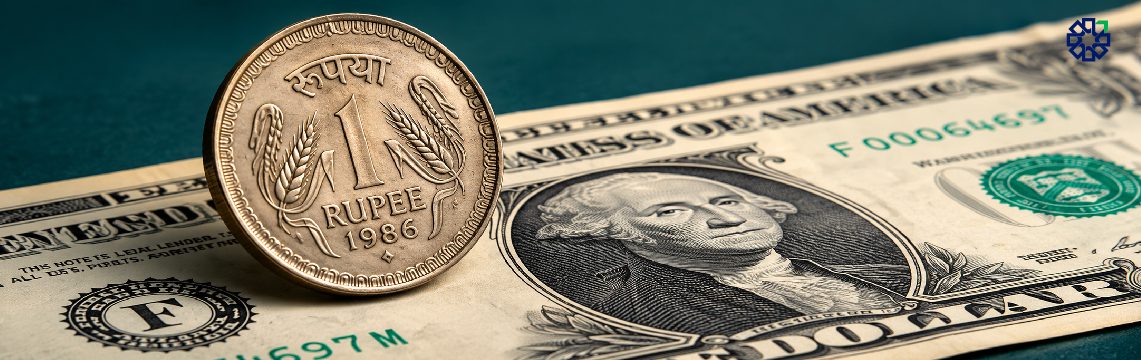
Rupee Opens at 96.71 Against Dollar: What’s Driving the Move
- 8th October 2026
- 12:00 PM
- 4 min read






Summary
The Indian rupee opened marginally higher at 96.71 against the US dollar on 8 October 2026, compared with the previous close of 96.77. The move came a day after the Reserve Bank of India (RBI) raised the repo rate by 25 basis points (bps) to 5.50% and its Governor said the rupee may be undervalued.Mumbai | 8 October 2026
The Indian rupee opened at 96.71 per US dollar on 8 October 2026, slightly stronger than Wednesday’s close of 96.77. A lower rate means fewer rupees are needed to buy one dollar. As of 11:41 am, the rupee traded at 96.7554 per dollar.
Why Has the Rupee Been Under Pressure This Year?
The rupee has been under pressure for much of 2026, especially since the West Asia conflict began in late February. The conflict pushed up crude oil prices, which hurts India as an oil-importing country. On Wednesday, the rupee moved close to its all-time low against the dollar.
To support the currency, the RBI introduced a concessional swap facility for deposits from Indians living abroad and for bond issuances. Banks have mobilised nearly $133 billion under the Foreign Currency Non-Resident (Bank), or FCNR(B), deposit facility alone. This eased pressure on the rupee for a few days, but the currency has weakened again in recent sessions.
What Did the RBI Decide and Say on 7 October?
The RBI raised the repo rate by 25 bps to 5.50% on 7 October 2026 and shifted its policy stance to calibrated tightening. The repo rate is the rate at which the RBI lends money to commercial banks.
Speaking to reporters at the RBI headquarters in Mumbai that day, Governor Sanjay Malhotra said, “By a number of estimates, including the REER (Real Effective Exchange Rate), the rupee is not overvalued; it may be undervalued.”
He added, “We will ensure that the rupee stabilises, that the rupee finds its correct value, and we will support an orderly movement of the rupee in finding its correct value and at the same time in ensuring that there is no excessive volatility.”
Malhotra also said that markets can be irrational in the short term but reflect their right value in the long run.
How Did Asian Currencies Trade Against the Dollar?
Asian currencies traded mixed against the US dollar. The Indonesian rupiah led gains in the region. The Japanese yen was the biggest laggard, falling 0.221%, while several other regional currencies weakened marginally.
| Direction | Currencies |
| Gained | Indonesian rupiah, South Korean won, Chinese renminbi |
| Weakened | Japanese yen (down 0.221%), Philippine peso, Thai baht, Taiwan dollar, Malaysian ringgit, Singapore dollar |
How Are Crude Oil and US Bond Yields Moving?
Brent crude, the global oil benchmark, rose 2.60% to $102.80 per barrel on 8 October. Concerns over a possible escalation between the US and Iran, along with threats to oil flows from the Middle East, kept crude prices high.
The yield on the 10-year US Treasury note rose 0.03 percentage points to 5.32%. The US dollar stayed lower on Wednesday after stress in European bond markets eased.
Outlook
Minutes of the US Federal Reserve’s September meeting, released on Wednesday, showed that all 19 policymakers supported the September rate hike. Most believed another increase would be appropriate by the end of the year.
Stay updated on Indian and global equity and commodity markets on PL Capital.
Disclaimer: Investments in securities market are subject to market risks, read all the related documents carefully before investing.
This is a knowledge-sharing initiative by PL Capital. The information provided is only for educational purposes and should not be considered as financial advice & has no influence on the investment/trading decisions of any investors.
For detailed disclaimers/disclosure and Mandatory terms and conditions please visit our website https://www.plindia.com/regulatory-content/