What are Candlestick Charts in Trading?
- 10th December 2025
- 01:00 PM
- 10 min read






Are you into intraday trading and seeking strategies to interpret market movement? A candle chart comprising different candlesticks might be helpful for you.
While earning profits from day trading can be tricky, skilled traders might make up to INR 1 lakh with strong strategies, and candle charts help them visualise market movements to optimise those profits.
Read through this blog and learn how to read a candle chart, its compositions, types and more and implement them in your trading strategy.
What are Candlestick Chart Patterns?
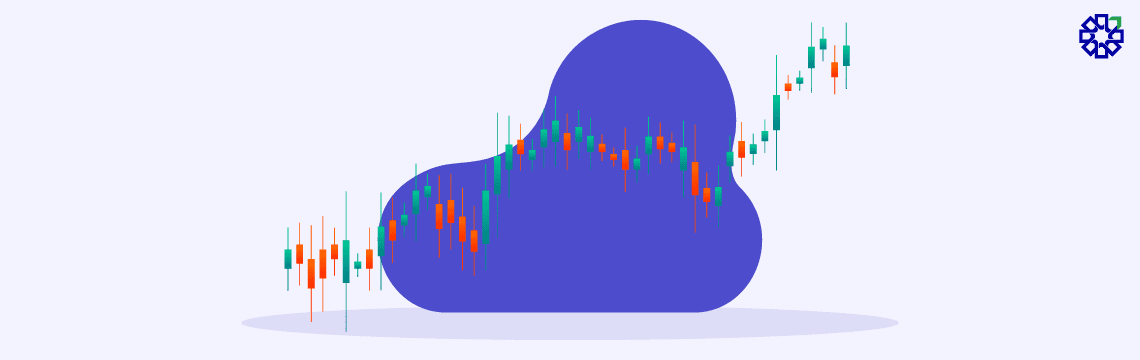
If you are curious to learn how to read a candle chart, you must first know what a candlestick chart means. It serves as a visualisation tool to portray the price movement of an asset depending on the prevailing market conditions.
Compared with other charts, such as bar charts, candle charts provide key data about asset price movement for a particular day. These include an asset’s opening and closing prices and represent them using the candles’ long bodies.
Typically, candles represent the high and low prices of assets for any specific period. Suppose a stock that you are observing opens at INR 120 and closes at INR 130 during a trading session. Thus, the candle’s body forms by stretching between this price range.
Now, if the price climbs to INR 135, an upper wick typically forms over candlesticks. Conversely, if the price goes down from INR 120 to INR 115, a lower wick forms on the candlestick.
This format on candle charts effectively communicates the price trend that typically lasts for a single trending session. It might even continue for a few days. Thus, by learning how to view candlestick chart, like other traders, you might be able to make decisions for market entry and exit efficiently while booking possible optimised profits.
Key Components in Candlestick Charts
To continue learning about how to read a candle chart, let us decode its key components, which are its body and wicks or shadows. Here is a detailed view of them:
-
The Candlestick Body
When you encounter a thick, rectangular and typically long figure on charts, it is the body of a single candlestick. It represents the direction of price movement. Continuing from the example, as the opening price is INR 120 and the closing is INR 130, a green candle might appear. If the opening is INR 130 and the closing stays at INR 120, a red candle might form.
-
The Shadows
Also known as wicks, they represent the highest and the lowest prices a stock has hit during a particular time frame. It appears either on the top of a candlestick. It shows the highest price it reached. Appearing at the bottom of a stick, it highlights the lowest price an asset hit during the time.
How to Analyse Candlestick Chart?
Aside from understanding its key components, you must also analyse a chart with candlesticks and gain an in-depth understanding of how to read a candle chart. Here are some key areas that you must focus on to analyse a candle chart:
-
Observe Green Candlesticks
As you have already seen, when prices are rising, a green candle typically appears, which means that bulls or buyers are dominating the market. Typically, longer and green candlesticks are bullish. Still, the price trend depends on its position on the chart. After a strong decline, a green candle might indicate a potential turning point toward an uptrend.
-
Consider the Red Candles
Conversely, when closing prices are lower than the opening, a red candle might appear. It means sellers or bulls have dominated during that trading session. They pushed down the closing price of the asset below its opening. A red candle appearing after any strong uptrend similarly indicates a downtrend in asset prices, and it helps you make a trade decision.
-
Locate Individual Candlestick Patterns
To meet your curiosity about how do I read candlestick charts, you must also learn to locate individual candle patterns. It is because different patterns portray different price trends. For example, if you spot a Morning Star pattern, it typically signals the bullish reversal after a downtrend. Conversely, an evening star typically denotes a bearish reversal.
-
Confirm with Volume and Indicators
As you learn about how to read a candle chart and analyse stocks with it, you must confirm its reliability with trading volume. For example, a bullish candlestick with higher trading volume might confirm an uptrend. Also, indicators such as moving averages, MACD, RSI, etc, help analyse candle charts.
-
Look for Support and Resistance Level
Typically, the candlestick formation on a candle chart becomes further actionable if it appears near a key price level. Suppose the stock we discussed moved between its lowest at INR 115 and its highest at INR 135.
Now, it shows support near INR 115 and forms a bullish candle. You might consider it a bullish reversal. If it finds a resistance near INR 135 and forms a bearish candle, traders consider it a bearish trend reversal.
With PL Capital Group – Prabhudas Lilladher, trade in stocks, invest in mutual funds, gold bonds and more. Download the PL Capital app today!
Different Types of Candlestick Patterns
As day trading appears to require a bit of in-depth market knowledge, strategies, and understanding of candle charts, making a profit from it might also seem complex.
About 20% of day traders reportedly make a profit. Therefore, while taking notes about how to read a candle chart, you must have a look at briefs of different chart patterns to increase profit potential:
-
Hammer Candlestick Pattern
On a technical analysis chart, you can spot a near the end of a price downtrend. It appears as a candlestick with a short body and a longer lower wick. It shows how far sellers pushed the price down during a session. However, despite selling pressure, it indicates that buyers took control back and pushed the price back up.
-
Inverse Hammer Candlestick
When talking about how to read a candle chart, you must learn about this bullish reversal pattern. Similar to the hammer candle, it also appears at the downtrend. The difference is that instead of a longer lower wick, it has a longer upper wick. It indicates that there is an increasing buying pressure after the selling pressure, and bulls might soon take over.
-
Bullish Engulfing Pattern
While reading a technical chart for trading, and after a downtrend, you might see a small red candle. Next to it, there is a larger green or billish candle. This formation is called the bullish engulfing pattern as the green candle engulfs the earlier red candle. It indicates that after a price downtrend, bulls or buyers have stepped in, and thus it signals a possible uptrend.
-
Morning Star Pattern
Being a bullish reversal pattern, here, a candle with a small body that often opens at a lower price than its earlier close. A longer green candle follows. Suppose the stock falls from INR 130 to INR 120. The next day, it opens at INR 118, showing indecision. The next day, it climbs to INR 128, moving well into the body of the first red candle and signalling a bullish reversal.
-
Evening Start Candlestick Pattern
Here, a green candle first appears, followed by a small candle of indecision. A red candle appearing next indicates that sellers are now taking over. For example, the green candle forms as the price opens at INR 120 and closes at INR 130. The next day, it opens at INR 132. Then, as the price drops to INR 120, a red candle appears, indicating a bearish reversal.
What Do Candlesticks Tell Us?
As you have learned different aspects of how to read a candle chart, you must have a look at the summarised view of what they tell traders. They are one of the popular methods for traders. They help in seeing how indices, such as the Nifty 50 or stocks, move within one hour, a day, or even weeks. Here is a summarised view of what you understand from candle charts:
-
Depicts Four Key Price Points
A candlestick on a technical chart indicates 4 key price points and helps in understanding how to read a candle chart. The opening price at which the trade opened, the highest and lowest price it reached during a session and its closing price. Also known as OHLC, it helps traders to understand the price direction.
-
Length of Candle Bodies
A longer candle represents how strong the buying or selling pressure has been. A small candle or a Doji represents a period of indecision, where price movement does not have a clear direction.
-
Series of Candles
While you are looking for how to read a candle chart, candles forming a series of technical charts, help you to locate possible price trends, market sentiment, etc. For example, when the series of candles creates a morning star pattern, traders often opt for buying or opening long positions to capture potential profits.
Conclusion
As a trader, you must learn how to read a candle chart as it helps locate possible price uptrend or downtrend while trading. As the name implies, it consists of candles with green or red bodies, showing the price range in a trading session. Its wicks show the highest and lowest prices an asset reached in a session.
With PL, trade in stocks, invest in mutual funds, gold bonds and more, all from one place, the PL Capital app. Download the app today and start investing!
FAQ’s on candlestick charts
1. How do traders interpret candlestick charts?
After learning how to read a candle chart, like most traders, you can also interpret candle charts by assessing the candle’s bodies. Also, its wicks, its position of appearance on the chart, help you understand the highest and lowest price points an asset touched during a trade and the possibility of a reversal.
2. What is the best candlestick for intraday stock trading?
Upon understanding how to read a candle chart, you can employ it while day trading. However, there is no such best candlestick for day trades, but traders commonly prefer bullish and bearish engulfing, hammer, hanging man pattern, etc.
3. Which candlestick pattern is the most accurate for trading?
While traders decide on accuracy by combining the trend forecast of a candlestick with other indicators, they prefer a few bullish or bearish candles. A few preferred bullish candles are morning star, bullish engulfing, hammer, etc. Some popular bearish candles are evening stars, bearish engulfing patterns, etc.
4. What is the 3 candle rule?
When grasping how to read a candle chart, the 3-candle rule helps you analyse the prevailing pattern of three subsequent candles to locate the market trend and potential reversal.